Read this 14-page guide from leading data analytics expert Donald Farmer, writer of the O’Reilly book, Embedded Analytics.
In this thorough guide, Donald walks through the following;
Why BI tool adoption among business users remains low, despite its success in the industry
How embedded analytics can enable insight and efficiency in almost any context
A detailed overview of the pros and cons of different methods for embedding analytics
How AI can transform data experiences - and why a semantic layer is essential for LLM accuracy
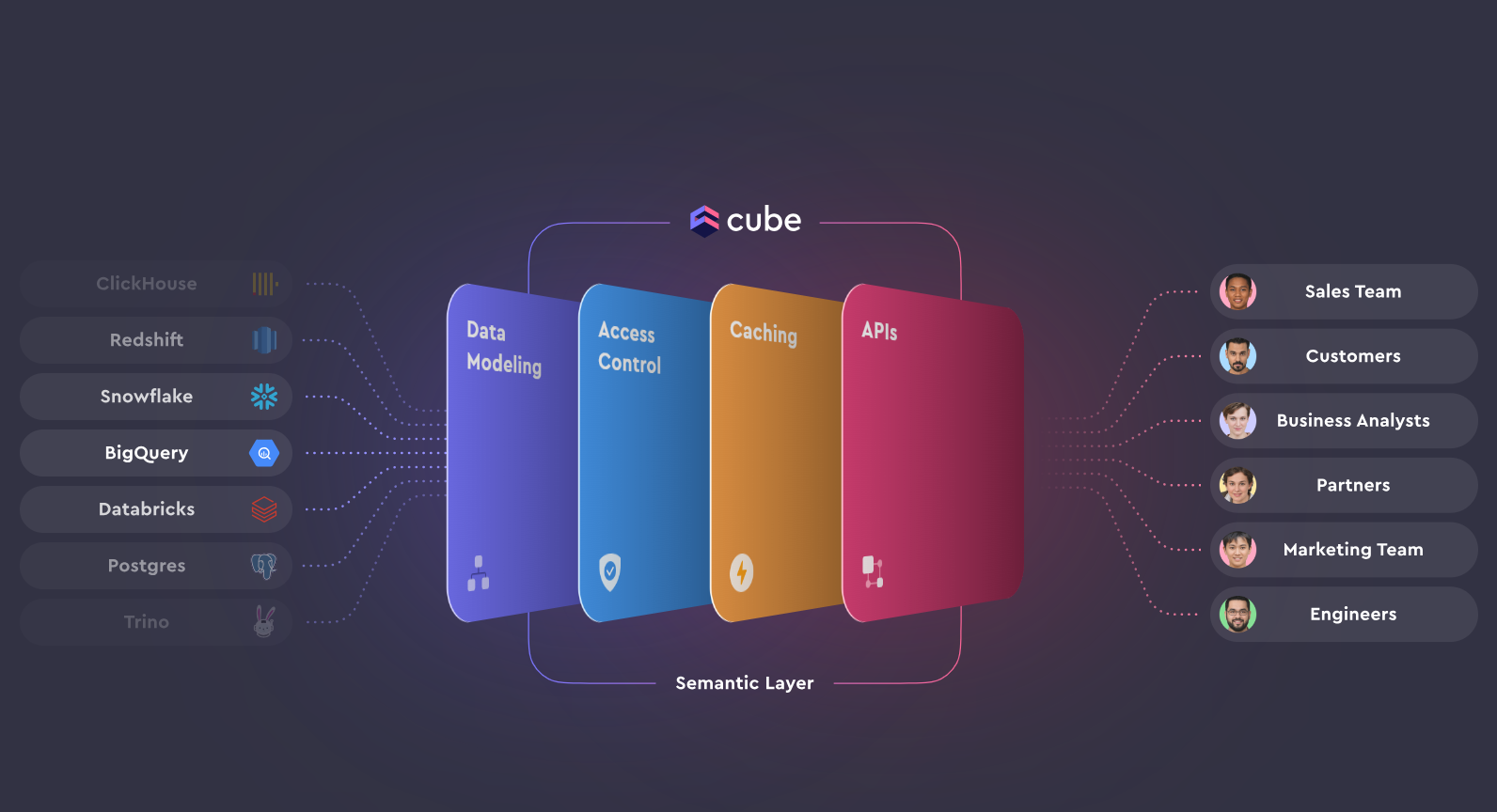
Read the report to learn more about embedding analytics using a semantic layer, the best method for achieving fast, accurate, and cost-effective data analytics for any internal or external data consumer.
We found Cube and, in two weeks, we delivered a highly customized and intuitive embedded analytics user experience - all without changing anything in our data stack
Why Semantic Layer with Cube
Consistent definitions mean consistently aligned teams.
Cube’s Semantic Layer provides a centralized, single source of truth for every team’s data— facilitating synchrony, efficiency, and productivity.